Showing posts with label Genre - Classics. Show all posts

Monday, April 15, 2013

Review: Who Was Dracula? by Jim Steinmeyer

who was dracula

A review by Shellie for Who Was Dracula? Bram Stoker’s Trail of Blood.

Shellie’s quick take:

A historical telling of how Bram Stoker’s 100 year old cultural icon – Dracula - was created and became the character that holds awe even today. This book goes into some of the significant happenings going on around the creation of the novel Dracula.

Shellie’s description:

Vampire fascination is not going to go away. We can see that in the popularity of books and cinema that include vampires. Interest in the novel Dracula, even a 100 years beyond its publication, proves this well. In the non-fiction book Who Was Dracula? author Jim Steinmeyer attempts to enlighten and dispel some long held ideas about who the character was, who Stoker based his character on, how the novel was created, and some intriguing historical details surrounding Stoker at the time.

It appears that Steinmeyer wants readers to believe that Dracula was not entirely based upon Bram Stoker’s boss Henry Irving (many Dracula scholars believe it was). In fact the character is influenced by some famous individuals and events that Stoker came across in his life. These include Oscar Wilde, Walt Whitman, Jack the Ripper and many more.

Less surprisingly, Steinmeyer believes that the mythology we have built around vampires is based upon what Bram Stoker created. He also states that Dracula became a powerful mystical figure a long time ago – indeed he says that Dracula was a revered pop cultural icon 100 years ago. So Vampire love is not new.

Shellie’s thoughts:

This was not an all-encompassing read for me; I felt compelled and intrigued in some parts but a bit lost in others. Generally, I find non-fiction historical books a bit hard to read, but I gave this a go because I loved the novel Dracula and feel that the character Stoker created is an exceptional and memorable one.  So naturally I was curious as to what influenced Bram Stoker when he was writing this popular novel.

There are a lot of meaty historical details around a variety of characters and Bram Stoker’s connection to them, as the author attempts to support his theories. This pulled me in and kept me reading, but at times I felt like I was reading more about Henry Irving (Bram Stoker’s boss and a popular actor and theatre owner) than I was about the novel Dracula or Stoker himself.

I did enjoy the book and in the end would say that Who Was Dracula? is for anyone who is interested in the elements that create a character such as Dracula; anyone interested in the historical situations that surrounded Bram Stoker and influenced him; and those interested in the reasons why it is still so popular 100-plus years after its publication. 3 stars for this intriguing historical book.

*A note to readers: if you are planning on reading this book you may want to read a few other things first – including Dracula, The Picture of Dorian Grey, Leaves of Grass and the Strange Case of Dr. Jekyll and Mr. Hyde.  It does contain some spoilers for these classics. Alternatively, be prepared to skip a bit here and there so you can still enjoy these great books to the full.


336 pages | 04 Apr 2013 | Tarcher

Tuesday, July 31, 2012

Review: Jane Eyre ~ by Charlotte Bronte

Jane Eyre

Review by Shellie for: Jane Eyre ~ by Charlotte Bronte (In audio; read by Susan Ericksen)

A wonderful reading of this dramatic classic romance. Set during Victorian times, upon the bleak and lovely moors of North Yorkshire, England. It has a strong, intelligent, and likeable heroine who has unusual moral character and perseverance, making the story even more compelling.

About:   A plain young girl, Jane Eyre is a left a penniless orphan in the care of her wealthy aunt, who has promised Jane’s dying uncle that she will care for the child.  Sadly this non-blood relative despises Jane, and at the age of ten Jane is shipped off to a boarding school where conditions are difficult in a different way. Yet Jane perseveres, receives an education and begins teaching at the school she once attended.

Her life and the real story begin when Jane places an ad in a newspaper and soon is accepted as a governess for the French ward of a local wealthy landowner Mr. Rochester. Mr. Rochester is a rouge of a man and is twenty years her senior. That he is charming, wealthy, direct, and not very handsome does not stop Jane from falling in love with him.  Yet this is only the beginning of this convoluted story, as Mr. Rochester has more entanglements than he wishes to reveal.

Thoughts:   I absolutely loved every moment of this wonderful classic in audio, with its unexpected drama that kept me guessing. That the reader has a lovely voice with its North Yorkshire accent made the story even more likeable and realistic(she sounded similar to my in-laws who live in the area - my husband being a Yorkshireman) .

The book is also an enduring and relevant classic. Although the language is old fashioned there are the author’s timeless insights into human nature that give us a glimpse into our modern lives too. And even though social structures have changed (like women being able to own property today), our entanglements and dramas can be surprisingly similar.

It has wonderful descriptions of the green dales that are part of the landscape even today in North Yorkshire.  With its weather swept beautiful moors and their natural bleakness, Charlotte Bronte describes them skillfully.  So if you would enjoy a vicarious trip to the English countryside, albeit 150 years ago, then this is a perfect choice for a read or listen.

I do not give many five stars, but this book is one that is very deserving. It captured me with every word and drew me in until the very last sentence. I recommend it particularly in the audio version read by Susan Ericksen which was just lovely!


Audio Edition: unabridged version read by Susan Ericksen ; Brilliance Audio; 17 hours, 21 minutes; May 25, 2005.

For more about Charlotte Bronte see her Wikipedia page: http://en.wikipedia.org/wiki/Charlotte_Brontë

DSCN2093DSCN2089

These are the hills above Skipton, North Yorkshire, which is approximately 15 miles from where the Bronte’s lived and wrote their novels. These pictures were taken during the summer of 2011, from our visit last year (you can see me and also John’s shadow on the right).  Isn’t it beautiful with the heather blooming? The weather was exceptional that day and during our visit. But, as is well known, it can change within moments and become wet, inhospitable, windy and cold.

I found that there are many retellings and offshoots of this classic. Understandably so, since it’s such a wonderful book. Several of interest are The Eyre Affair by Jasper Fforde, Wide Sargasso Sea by Jean Rhys, and The Flight of Gemma Hardy by Margot Livesey.  And on my review list is Dark Companion by Marta Accosta. It’s a young adult story recently published by Tor. It has a speculative thread including vampires. Now that I have read the classic I feel better equipped to read these retellings.

This book will be included in the challenge - Fill in the Gaps.

Friday, July 27, 2012

Review: La Vagabonde ~ Colette

la vagabonde

Review by Shellie for: La Vagabonde ~ by Colette (audio)

A classic feminist translation from French that’s a “romantic” story told by a heartbroken performer named Renee, who must choose between freedom and love during Victorian times.

About:  Published in 1910 this is a short book that is supposedly a semi-autobiography from the interesting bohemian author – Colette. The story is told in first person by Renee Nere, the main character who has divorced her wealthy, philandering, artist husband after eight years of emotional torture.  Damaged, much wiser, yet lonely, she has managed to support herself as a dancer and actor in Paris. Although not considered an acceptable profession for her social standing, it never-the-less gives Renee a sense of independence which is hard earned during a time when a woman’s independence was not common and, indeed, shunned.

When a wealthy gentleman falls in love with Renee and promises her the moon, and the dancer attempts to decide between marriage and independence - that is when the reader gets a glimpse into why this book is considered a feminist classic.

Thoughts:  I truly enjoyed this book in audio, with its UK-English accented reader and its esoteric French phrase usage. (I speak 4 words of French and received horrible grades for it in high school, so did not understand most of it). Yet the English part of the book is descriptive and pleasant, if slightly long winded at times. At one point Renee travels the French countryside, and the letters Renee writes her would be lover are sweet indeed.

When doing research about the author, I found Colette to be an intriguing subject. Living a life that was not standard, she broke many social rules including affairs with a tabooed family member and women.  Although this book does not have LGBT elements, it’s still feminist in nature and is not your happily-ever-after romance.  But I think that is where its value lies, in a “realistic” example of a woman who goes against the social norms of the times and lives her life to the fullest.

I give this wonderful short novel (especially in its audio version) a 4-star rating and recommend it highly for those interested in anything French, Victorian classics, and feminist fiction.


Unabridged; read by Johanna Ward; translated by Charlotte Remfry Kidd; Blackstone Audio, Inc; 6 hours, 22 minutes; Sep 5, 2006.

For more information on Colette, see her English Wikipedia site. There is loads of juicy details about her well lived life there: http://en.wikipedia.org/wiki/Colette

This book review will be included in the Fill in the Gaps challenge.

Tuesday, July 3, 2012

Review: The Island of Dr. Moreau ~ by H. G. Wells

Island of Dr Moreau

Review by Shellie for: The Island of Dr. Moreau (in audio) ~ by H. G. Wells

A classic science fiction and horror mix that includes monsters created by the amoral Dr. Moreau.

About:  Set in the late 1800’s, an educated and professional man named Edward Prendick inadvertently becomes stranded on a South Pacific island. This tropical island houses the laboratories of Dr. Moreau - a mad scientist of sorts who is doing some unusual and cruel experiments on animals on the remote island. Although Moreau attempts to hide his studies from the stranded newcomer, Prendick eventually finds out what is becoming of the animals when he hears screaming from the laboratories. Prendick is naturally terrified that he too may become one of the doctor’s subjects.

Thoughts:  Originally published in 1896, the novel is an adventure, with some thrilling twists in a spectacular setting. It’s definitely horrific and scientific, although the science is unrealistic based upon today’s standards. It has also been adapted into a variety of movies over the past 100 years. Some look interesting, so I plan to watch a select few since a movie version could be fun and I think would translate well.

There is some interesting commentary hidden in the story, bringing up questions around human and animal social structure, issues of vivisection, definitions of pain, and some unusual monsters; which in some ways reminded me of Frankenstein. So it could be an excellent book for discussion - take a look at its Wikipedia page where there is loads of fodder for thought: http://en.wikipedia.org/wiki/The_Island_of_Doctor_Moreau

Highly recommended for anyone interested in stories with darker themes. Only 200 pages or so, or just several hours of listening time, I finished it quickly. It was a great read since I love science fiction, horror, and classics and this is all three. I give it a 4 star rating.


Unabridged audio edition;  read by Jonathan Kent; Tantor Media; 4 hours, 7 minutes; Dec 12, 2006.

Bio:  Herbert George Wells lived from 1866 to 1946. He was a British author, best known for his work in science fiction. Also a prolific writer in many other genres, including contemporary novels, history, politics and social commentary, he even wrote text books and rules for war games. With Jules Verne and Hugo Gernsback, Wells is considered one of the “Father of Science Fiction".

Interestingly, Wells' training was in biology, and his thinking was Darwinian in context. He was also an outspoken socialist and later became a pacifist.  For more information link about him link to his bio on Wikipedia: http://en.wikipedia.org/wiki/H._G._Wells

This book will be include in several challenges. Two are Fill in the Gaps: 100 Book Project and The Basics Challenge where I explore speculative fiction.

Friday, May 4, 2012

Review: This Perfect Day ~ by Ira Levin

this perfect day

This Perfect Day ~ by Ira Levin; Pegasus Books (2010). 

Originally published in 1970, this is a classic adult dystopian novel that portrays a frightening future in which a pseudo-government medicates its citizens and regulates all behavior, creating a hive like community. Everyone is equal and its adherents chant: "Christ, Marx, Wood and Wei led us to this perfect day".

About:   “Chip” (Li is his real name and one of four names for every man given by the society) is a member of a “perfect” society where the members are semi-sexless, have no discernable race and exist through genetic modification. They live a day-to-day drone like existence where men do not have to shave, women have no breasts, they all wear identical coveralls, eat cakes and drink coke for every meal, and everyone gets along.

When Chip decides what he really wishes to do with his life and expresses it out loud as a youngster, his desires are superficially quelled as unacceptable and is told he is to have the career chosen for him by the government for the good of the whole. Then one day his internally conflicted self meets up with a group of members who have figured out how to avoid taking their weekly scheduled meds. When Chip joins them temporarily, he finds he has never felt more alive and decides he wants to live this way everyday.

This is just a glimpse of what happens to Chip, because things become decidedly more involved as the story continues. 

Thoughts:  I enjoyed this classic novel – even though it did not completely absorb my interest for the entire novel since I did a fair amount of skimming; a key sign that the novel was not going to be a big favorite. It felt like the first part of story, detailing Chip’s life in this medically created  “utopian” society, went on a bit longer than needed for me. It did pick up in the second part of the novel and I do think that the story line is an intriguing one, and supports the fact that the book is often considered a corner-stone classic for the genre and included with the likes of 1984 and Clockwork Orange.

It also stimulated several questions – because as in all dystopian, this society is not as idyllic as it appears. I found I started asking myself: Who or what is leading and monitoring this society? What is their reason behind creating this pseudo-utopia? And are these leaders as altruistic as it first appears?

Recommended to anyone who enjoys social science fiction where a society has gone askew or indeed to anyone who plans to write one. So if you’re interested in a read that may be a bit chewy, or you would like the answer to the above questions, this will be a great story for you. For those not interested in reading the book, but who have a curiosity about the plot there is a complete summary (with spoilers) at its Wikipedia page. http://en.wikipedia.org/wiki/This_Perfect_Day.

So I give This Perfect Day a 3 stars. I would have considered it torture as a teenager forced to read it in a high school literature class, like when I read 1984, but as an adult it was quite a decent read with a complex and surprising plot.


This Perfect Day was written in 1970 and won the Prometheus Award soon after it was published. Ira Levin, its author, passed away in 2007 and also wrote other books now considered classics - The Boys from Brazil, Rosemary’s Baby, and The Stepford Wives. The novel has been consistently re-published over the years with a variety of interesting covers. This latest publication makes the book available in e-book format.

I will be including this book in The Basics Challenge where I explore speculative fiction and Fill in the Gaps.

Thanks for reading.

Monday, December 5, 2011

Review: The Picture of Dorian Gray (audio) ~ by Oscar Wilde

dorian gray

Review by Shellie of: The Picture of Dorian Gray (in audio) ~ by Oscar Wilde; read by Simon Vance

A classic gothic tale which has “Faustian themes”. The story can be seen as questioning character and its relationship to youth and beauty within the setting of upper class Victorian London.

About:   Dorian Gray is a wealthy young Englishman who has an angelic handsomeness. His beauty is such that he is believed to possess exceptional character too.  When he becomes a subject for a painting by a local artist everything changes. As the gorgeous Dorian’s painting is finished, the artist realizes it has become the best work of his career – so much so that it contains an essence of himself including a piece of the artist’s soul.

When viewing the final version of himself on canvas, Dorian realizes how extraordinary he is physically – but this has sad consequences too, since Dorian’s vanity becomes warped; particularly when he realizes from one heartless act that the painting reflects his rightfully earned ugly expression:

The quivering, ardent sunlight showed him the lines of cruelty round the mouth as clearly as if he had been looking into a mirror after he had done some dreadful thing. ~ Chapter 7

For Dorian the picture becomes an obsession, an intrigue, a game around how the picture will look as he descends into debauchery and cruelty. He watches the changes with a twisted intrigue and curiosity:

For there would be a real pleasure in watching it. He would be able to follow his mind into its secret places. This portrait would be to him the most magical of mirrors. As it had revealed to him his own body, so it would reveal to him his own soul. ~ Chapter 8

Thoughts:  Listened to in audio, the proper English accented reader does a nice job of rendering a classic story so that it is easy to listen to. With various accents and changes in gender as well as its old fashioned writing this is a perfect book for an “audio read”.

Written over 100 years ago this is Oscar Wilde’s only published novel. It was first printed in a magazine and then published in various other versions over the years with parts removed and replaced, since the book was not without controversy. As a know gay author, his homosexuality is reflected lightly in this novel, as well as his subversive opinions around upper class Victorian life-style. Perhaps he was imparting an important message around beauty, character, and more? I am certain he was. One which is also appropriate for today.

In addition to the historical details and interesting cultural information from Dorian’s world travels, I found that there is a syndrome named after the main character. Although not recognized in the Diagnostic and Statistical Manual of Mental Disorders (DSM-IV), it is called Dorian Gray Syndrome:

A cultural and societal phenomenon characterized by an excessive preoccupation with the individual's own appearance accompanied by difficulties coping with the aging process and with the requirements of maturation. http://en.wikipedia.org/wiki/Dorian_Gray_syndrome ~ Wikipedia

I liked that little piece of pseudo-medical geeky-ness quite a lot actually, as it says something about human nature along with this horror story and Wilde’s point. 

The Picture of Dorian Gray is one of those novels that can be discussed at length, analyzed and rehashed and then some. I am happy to say it was not a forced read as a young adult in college or high school, otherwise it would have ended up in the pile of books I disliked. The language is of course antiquated and perhaps a bit drawn out by today’s standards. However as an adult I enjoyed it in this specific audio reading. It has an amazing premise and a strong message. I give this classic piece of literature a 3 stars. I liked it.


Unabridged; Blackstone Audio, Inc. 7 hours, 44 minutes; Feb 13, 2008; Awards: Audio Award Nominee - Audio Publishers Association

This book will be included in the Basics Challenge – where I explore speculative fiction; Historical Tour de Genre Reading Challenge;  and the Fill in the Gaps 100 Book Project. Link to our 2011 Challenge List.

For access a free copy in many types of readable forms; including online and e-readers - link to: http://www.gutenberg.org/ebooks/174

Thanks for reading.

Thursday, June 30, 2011

Review: The Time Machine ~ by H. G Wells


time machine

Review by John for The Time Machine ~ by H. G. Wells (1895)

An old science fiction classic that still lives up to its reputation; a delightful read and a trend-setter that was published 100 years before anyone ever dreamt up “steampunk”.

About:    A gentleman inventor lectures his dinner guests about the “fourth dimension”, saying that in addition to length, breadth and height, everything also has longevity. He tells them that he had become frustrated that while things can be moved freely in three dimensions, there seemed to be no free movement in the fourth; so he set out to build a machine that would allow objects to move backwards or forwards in time. He goes on to demonstrate a table-top version of the machine and tells them that he is close to completing a full-scale version that would be capable of transporting a person through time.

The skeptical guests return a week later, and, finding that the inventor is not there, start dinner without him. Presently he turns up, bedraggled, limping and starving hungry, and proceeds to tell his disbelieving audience a fabulous tale of his travel into the far future.

The Time Traveller (as he is called in the story) has ventured 800,000 years into the future, where he finds a gorgeous garden-like world inhabited by the Eloi - small, frail humans who seem to be lacking in intelligence, curiosity and motivation. They spend their days playing and eating the plentiful fruit that grows all around them. He eventually theorizes that having overcome the challenges of nature, the defining characteristics of humans that helped them to advance were no longer necessary, and through gradual evolution humanity has naturally regressed.

It turns out that he is only partially correct. He gradually becomes aware of a second race of beings that could not be more different than the Eloi. The ape-like Morlocks live in total darkness and only appear at nighttime, and they are truly menacing creatures. Surely they couldn’t have evolved from humans too?

As he starts to better understand this strange new world, he becomes embroiled in a struggle with the Morlocks who have stolen his time machine. He eventually manages to flee from them but is flung even further into the future, where he experiences a moribund earth suffering from a lack of sunshine. Finally he returns to his own time, where only a few hours have passed since he started his adventure.

John’s Thoughts:   It is difficult to believe that this book was written well over a hundred years ago. To write futuristic science fiction that is still fresh and relevant after all of that time is a remarkable achievement. Some of the language and wording is a little old fashioned, but the ideas, concepts and vision could well have come from a 21st century writer. Which is actually a little ironic, given that Wells was writing about time travelling! Hmmm.

Anyhow, not only was Wells a ground-breaking novelist in the genre, but he was also a fine writer. The Time Machine is a short story of only about a hundred pages (depending on the book format), yet he has crammed so much into those pagetime machine S&Ss while at the same creating a story that is very easy to read. You have to suspect that most writers today would have turned all of those ideas into a humungous bloated three-volume series. Hurray for the short story format and for talented writers who can work in that difficult mode.

So a great story that is well-written - but it is also very thought provoking. His ideas on potential human evolution and social systems might not resonate with everyone, but they are credible and do make you think; and they do make for a very neat plot. Obviously I like this book a lot; I’d rate it 4.5 stars and recommend it to just about anyone. You certainly don’t have to be science fiction buff to appreciate it – the book doesn’t dwell on scientific or technical details at all.


US|UK|Canada. The Time Machine (enriched classics) 176 pages: Simon & Schuster (June 29, 2004)

Purchasing links are for the bottom cover copy. The edition John read, whose cover is at the top of the post and came with the arc of The Map of Time by Félix J. Palma for promotional purposes. John is currently reading this tome that was published on Tuesday of this week. It is getting some great reviews.

map-of-time_thumb1

The Map of Time  ~ by Felix J. Palma; translated by Nick Caistor (June 28th 2011) With links to H. G. Wells, this novel is set in Victorian London and also has literary connections to The Time Machine and Dracula. It is translated from Spanish. US|UK|Canada.

Maybe The Map of Time will be John’s first 5 star? As always John will be addressing any comments around this review, so don’t forget to check to follow up box to get his reply.

This book will be included in a variety of challenges – The Steampunk Challenge, Get Steampunked! and The 42.

It’s a three day weekend coming up here for us in the US. I just love 4th of July! John being a Brit not so much. *wink*

Friday, December 24, 2010

Review: The Tempest ~ retold by Ann Keay Beneduce, illustrations by Gennady Spirin


3365024128a0aa367c5fc010.L._SL500_AA300_

Reviewed by Shellie:  ~  The Tempest ~ rewritten by Ann Keay Beneduce with movie tie in information and more!

We are such stuff as dreams are made on…..

About:  This is a child’s picture book and is a retelling of Shakespeare’s play. It is about Prospero, the Duke of Milan, and his small daughter who are set adrift on the sea by the king of Naples and Prospero's evil brother. They are conspiring to acquire his land and holdings, but do not murder Prospero and Miranda since the evil doers do not want to be blamed for their deaths.

However, Prospero is a magician of great talent and he and Miranda survive the incident. They are washed up on an enchanted island inhabited by a variety of magical beings – both good and bad. Taking refuge in a cave, they try to live a peaceful and happy life. As Miranda comes of age Prospero knows she will need the companionship of others, so he conjures up a storm which blows his brother’s traveling ship onto the rocks around the island. He and the remaining crew are brought on shore, but because this includes the conspiring king as well as the king’s son, the story has just begun.

Thoughts:  Ah Shakespeare, the incredible and articulate bard from days of yore. What I would not give to understand his wonderful and archaic language. Difficult as the verbiage it is for adults, it is much more so for children. With consideration to the many wonderful tie-ins around this fantastical story, it’s a shame not to have a simpler basis on which to build an understanding. That’s where a book like this can come in, as a way for adults to help children understand and to introduce them into the language of old England, and the wonders of ~ The Tempest.

With lacey and old fashioned illustrations from Gennaday Spririn, the co-author has included current language which is understandable for children (and for adults like me). Yet for authenticity she has included some brief and easy to understand quotes from Shakespeare’s actual work – like the one prefacing this review. (I have always wondered where that familiar line had originated). Helped by the illustrations, it is a way for children and adults to further understand the basis for Shakespeare’s complex story lines and language. I liked this book a lot and give it 3.5 stars.

I am actually surprised there are not more picture books as well as a graphic novel for the tale published. If  there are I could not find one (hint to artists and publishers).

Purchasing links for this out of print book - US|UK|Canada; Ages 9-12; Hardcover: 32 pages; Philomel; 1st Ed. edition (March 19, 1996)


A new movie version has just been released (PG-13), with an incredible cast including Helen Mirren (as Prospera – I like the gender switch) and Russell Brand (as Trinculo – who is not mentioned in the above book). We are very excited as we love these English actors. I have included the movie trailer; the movie was out on December 10th (in the USA). It’s the perfect family holiday film!


Here are two books which I hope to read soon, which are based upon The Tempest from Tor. We see Miranda here on these amazing covers. I think Tor has the best covers for fantasy. Don’t you?

97807653588379780765319302

  • Prospero in Hell ~ by L. Jagi Lamplighter; Amazon US/UK/Canada
  • Prospero Lost ~ by L. Jagi Lamplighter; Amazon US/UK/Canada

For publisher’s blurbs see Layers of Thoughts preview for the L. Jagi Lamplighter series on Prospero.

For more Shakespearean spin-offs and a very fun post link to io9 ~ for the Coolest Shakespeare Riffs in Fantasy and Science Fiction.

Have a great day ~ its almost Christmas!

Tuesday, December 14, 2010

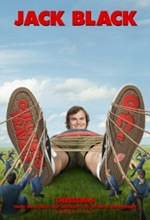
Preview: Gulliver’s Travels ~ by Jonathan Swift (with movie tie in and a contest too!)


51OThVo7rLL._SS500_

Gulliver’s Travels ~ Jonathan Swift

Have you heard about the new movie soon to be released - Gulliver’s Travel with Jack Black in the staring roll as Gulliver?

It is slated to be released on Christmas Day and is in 3D – according to IMDb. It’s a modern take on the classic, and Penguin has taken the opportunity to release a new paperback version.

I have not read the book yet but know a bit about this fantastical story. Written in 1726 by Irish author, Jonathan Swift, it is touted as as an adventure story for children, and for adults as a social satire. Gulliver and his four journeys make for a fascinating trip; there’s realism and symbolism, with a philosophical theme running through its pages. I am looking forward to reading about those crazy Yahoos!

(DVD cover title links to IMDb ~ for more information about the movie and its release date).

Amazon purchasing links for the Penguin book edition are US|UK|Canada.

Paperback: 304 pages Penguin (Non-Classics); Reprint edition (November 2, 2010)


377531735_3cfb5bed14

More from Penguin ~ a Contest!

Want to take the cold plunge to win 24 Graphic Deluxe Classics from Penguin?

A year ago Penguin created a list of their top ten classics which they thought everyone should read. Reader response was great in that many felt that their personal favorites were left out. So Penguin decided to rework this list with reader’s opinions.

They started with this post a year ago. Now, in the attempt to rework this list Penguin Classics hosted a contest which began in September of this year. They asked US residents to decide what were their top 25 books. Since then they have narrowed it down to the 25. Now they want to know “which are your top 10 classics?" from this 25. (Live link, connects to Layers of Thought’s post, where I listed mine from the first part of the contest).

You can vote for your top 10 of the 25, since the contest is still open and ends December 17, 2010, 11:59:59 PM Eastern Time. Link here for the contest survey document, and vote for your top 10.

Now for the really great bit!  They also have another contest involving a very fun prize. Whoever can best predict the top 10 list, in order, will win the whole Graphic Classics collection, which is 24 titles total. To enter Email your predictions from 1-10 to penguinclassics@us.penguingroup.com for a chance to win. Exact rules for how to enter your predictions can be found on the website.

Here are three of the the 24 that I chose to show for visual interest (covers link the the Penguin purchasing page for each book). Here is the page for the entire list of Graphics Classics. Wow, I want a copy of each!

9780143039525H9780143039976H9780143039013H

Have fun and good luck!

Monday, November 8, 2010

Read a Myth Challenge ~ 2011


medusa

Read A Myth Challenge  ~  January 1, 2011 to December 31, 2011

It is hosted by JoV of Bibliojunkie and Bina of If You Can Read This, and you “share any stories about and around mythology”. (Badge links to challenge site).


There are several levels ranging from 2 to 8 books where we have chosen:

Level 4 Ogma:  The God of all Myths!
Mix and match of any 8 books from the myth series or any mythology books, with the following conditions:

  • Must cover more than 3 different countries.
  • Must include at least 1 non-fiction book on mythology study.

What books qualify for the Read A  Myth Challenge?

1)    The book can be a re-telling of myth from any publisher.
2)    The book can be a non-fiction take on mythology.
3)    The book can be folklore or a fairy tale commonly told in your culture.


What a wonderful challenge!  We will be pulling books from Shellie’s reading shelf for Myth, Fable, and Fairytale on Goodreads and have quite a few books up for review which will fit, all within many different genres and countries.

Challenge site review page link

Our reviews will be listed and linked below:


Also ~ sort of related and not a challenge we intend to join (though I’ll definitely be lurking) is really-old-classics3the -  Really Old Classics Challenge!

If your interested in reading books which have been published prior to 1600 then this is for you! (Badge links to the challenge site.)  Sept. 1, 2010 and ending on Dec. 31st, 2010. It has already started but there still is time.

Found via Trish from Eclectic Eccentric a thoughtful blog with something for everyone.

Happy Monday! 

Wednesday, October 20, 2010

Review by Shellie: Dracula ~ by Bram Stoker (audio version)


51R73EP5VBL._SL500_

"I am Dracula, and I bid you welcome . . . "

An enduring classic with an extremely charming, truly evil, yet almost human monster. I suggest leaving the lights on.

Synopsis:   With a Victorian setting in the late 19th century, a newly practicing attorney/solicitor from England is commissioned to visit a new client for his firm. He is to meet with this wealthy gentleman and stay at his castle in the mountains of Transylvania, while giving him advice on property acquisitions within the UK. The journey starts out decently for Jonathan Harker, but “red flags” pop up as he is warned by the locals and experiences eerie events during his journey to the Count’s country estate.

When he reaches his destination things are not as he was lead to believe. He finds that the Count himself is misleading and extremely intelligent, with a business savvy to match. Most disturbing is when Harker realizes the castle has no servants, parts are in complete ruin, he sees the count doing not very human things, and it appears that he is in fact a prisoner with in the castle. When he finally returns home, the young lawyer is beside himself, and worse yet it appears that he may have been followed. This scary story has only just begun.

Thoughts:   This is a wonderful tale which deserves to be read by anyone interested in classics, horror, and evil vampires. That it was written over 100 years ago and the emotions it incurs are still heart quickening, attest to the universal nature of this horror story and make it an enduring classic.

Set partially in Whitby, an amazing town on the East coast of England with iconic structures which still exist today, the story includes a variety of interesting and well developed characters, with our main character the Count, who is the evil embodiment of a sociopathic killer.

It is all told in letter format - epistolary or diary entries with each character well developed and interesting. Listening to the book in audio format, the telling is done via various voices and is close to perfect - old English accents, changing for each of the characters. I enjoyed it immensely. 

As for rating this classic I would say 4.5 stars. I recommend this version if you decide audio is the way to go for you.

***************************************************************

Some Information about Whitby via travel pictures.

Below are pictures which John and I took in 2009 on one of our many visits to England where he is from.  When experiencing this book in its audio format these images helped it come alive for me. I could not help visualize this setting as it was described by the author. Also included below are several links to festivals based in the area, and a picture of our brother in law in full Dracula regalia at one such event which occurred last year in the town.

DSCN0091

Whitby is on the Eastern side of Northern England. Set on the North Sea. The water is wild and choppy and very cold even in summer. This picture was taken from the pier which is located at the bay/river mouth and is a Southern outcrop of highland. Making this a perfect spot to watch incoming ships or marauders in this ancient  port city. It is also the spot where the gorgeous abbey is located,

This was taken during the summer June 2009. It was truly cold and windy, the norm for the area. Further to right on the mesa  you can actual see the little bits of the abbey’s spires. It is a key feature in several of the settings described in Dracula.

DSCN0070 DSCN0077

Above are two pictures of the ancient abbey. They are described in the book exactly as they are pictured here. It was lovely walking through and inside the abbey, looking up at the architecture. Here is the historical setting for the spot:

The first monastery here was founded in AD 657 by King Oswy of Northumbria. An Anglo-Saxon style 'double monastery' for men and women, its first ruler was the formidable royal princess Abbess Hild. Here, Caedmon the cowherd was miraculously transformed into an inspired poet; here, the future of the English church was decided by the Synod of Whitby in 664; and here the relics of Northumbrian kings and saints were enshrined.

from the non profit site – English Heritage.org.

DSCN0063 DSCN0064

These are pictures of the hillside town walking down from on top of the plateau where the abbey is situated. We walked down on the cobbled streets from a very very old cemetery that is West from the abbey. On the left you can see across the channel and to the left the man made water breaker, which prevent the wild waters from coming into the river/bay. This water way is an  important setting within the book as well.15137_328923465230_904925230_9798285_6353174_n

To the right is my English brother in law, dressed as Dracula at a local festival held in Whitby, which the entire family attended.

If you are interested further, there is a gothic blog called Dracula in Whitby which gives you up to date information on a variety of festivals happening in the area.

************************************************

  • Audio CD
  • Brilliance Audio on CD Unabridged; Unabridged edition (September 25, 2005)
  • Genre: Classic Horror

    Amazon purchasing links - US/UK/Canada or The Book Depository - AUD and Euro.

    This book will be included in The Speculative Fiction Challenge, Fill in the Gaps, New Author, The Basics, and I am going to sneak it into the RIP V challenge even though it should have been included last year since I think all would love to see the Whitby pictures.

    Happy Almost Halloween Everyone!

  • Friday, October 15, 2010

    A Contest for Classics Lovers ~ from Penguin


    917080352_ca04620c79

    For a change of pace here on Layers of Thought – let’s think about classics while asking the question: 

    Which are your favorite Classic? ~  Join this poll and perhaps win a prize,  three Penguin classics and a book bag.

    Here’s how it all began ~ Last year Penguin compiled a list of the 10 Essential Penguin Classics they thought every person should read.  *Just be careful not to sign up for last years sweepstakes on the above link, like I did.

    Penguin thought their list was complete, but now admit they were wrong. Thanks to outstanding, passionate feedback and questions (like where was Don Quixote? War and Peace? On the Road?), now the list is being recreated with readers’ choices.

    So help to redefine the Top 10 Essential Penguin Classics. Click here to peruse the long list of 100 and then vote for your top 10 before November 1st. Everyone who votes will be entered for a chance to win ~ one of three tote bags filled with three Penguin Deluxe Classics.

    In November they will announce a shortlist of 25 classics, determined entirely by readers’ votes and opinions. Wait there's more - for the true classics die hard fan who would like to be a bit more involved - check for updates regularly on the Top 10 Essential Penguin Classics website and chat about your choices at the Essential Classics Redux community page.

    Its a great time to read classic with the weather getting cooler here in the Northern Hemisphere and still cool enough to ponder a classic on the Southern side.

    Please note that this contest if only for the US, and am currently working on getting international Penguin updates.

    Shellie’s Choices:

    Favorites:

    1. MY ÁNTONIA by Willa Cather
    2. THE GRAPES OF WRATH by John Steinbeck
    3. OF MICE AND MEN by John Steinbeck
    4. LEAVES OF GRASS by Walt Whitman
    5. THE SCARLET LETTER by Nathaniel Hawthorne
    6. FRANKENSTEIN by Mary Shelley
    7. WALDEN AND CIVIL DISOBEDIENCE by Henry David Thoreau

    Hope to Read:

    1. ANNA KARENINA by Leo Tolstoy
    2. CANDIDE by François Voltaire
    3. EAST OF EDEN by John Steinbeck
    4. ON THE ROAD by Jack Kerouac
    5. GREAT EXPECTATIONS by Charles Dickens
    6. WUTHERING HEIGHTS by Emily Brontë
    7. GULLIVER'S TRAVELS by Jonathan Swift
    8. JANE EYRE by Charlotte Brontë
    9. DON QUIXOTE by Miguel De Cervantes Saavedra

    Disliked or Abandoned:

    1. THE ODYSSEY by Homer; Robert Fagles (Translator)
    2. THE ILIAD by Homer; Robert Fagles (Translator)
    3. PRIDE AND PREJUDICE by Jane Austen
    4. LITTLE WOMEN by Louisa May Alcott
    5. THE CANTERBURY TALES by Geoffrey Chaucer

    *All above active links go directly to the Penguin page description for the books.

    ************************************************

    And just in case I have not overloaded you with enough information here is an interesting related link:

    So dear readers which are your favorite classics? Which did you really dislike or that you were forced to read as a youngster? Which do you really hope to read one day?

    Have a great Friday!

    Wednesday, September 29, 2010

    Banned and Challenged Books ~ with Nancy Pearl and Rick Wartzmen


    ALA_BBW_Poster_2010_sm

    To Help Support Banned Books Week we have four audio broadcasts about banned and challenged books.  A bit about the how and why books are challenged or banned.

    Penguin Classics ~ On Air radio series has four clips around Banned and Challenged Books as the discussion topic for its latest broadcast. Hosted by Penguin Classics Editorial Director, Elda Rotor, this engaging episode will coincide with Banned Books Week, happening this week from September 25th – October 2nd.

    This broadcast is available at their website and through iTunes – which can be found by linking on the top right on the text “View More By This Publisher” and bring up itunes on your screen. Subscribe to Penguin Classic on Air. You can tune into SIRIUS channel 117 and XM channel 163, or listen to the imbedded section at the bottom of this post.

    It features the unparalleled perspective of Nancy Pearl, librarian extraordinaire and author of the critically acclaimed Book Lust, More Book Lust, and Book Crush (links to recent review here at Layers of Thought.)  This first episode focuses on several talking points, including the difference between a banned and challenged book, and guides the listener through the process of how a book comes to be banned or challenged. Drawing from years of experience, Nancy also gives great insight to the invaluable relationship between a library and its community.

    Nancy and Elda also discuss famously banned books such as Lady Chatterley's Lover by D.H. Lawrence, Mark Twain’s The Adventures of Huckleberry Finn, and J.K. Rowling’s highly challenged modern classics—the Harry Potter series.

    Also featured in this four part audio is Rick Wartzmen, author of Obscene in the Extreme: the Burning and Banning of John Steinbeck’s Grapes of Wrath. In his fascinating interview, Wartzman describes the crucial impact politics and reader climate have on why some books turn into scandals, paying particular attention to the nationwide uproar surrounding Grapes of Wrath and Gretchen Knief, the lone librarian who stood up against its banning and burning in the 1930s.

    Below you can watch and listen to this series with each being about 6 minutes long. 


    If you’re interested in banned or challenged books take a few minutes to listen to these informative discussions.

    Penguin has sent this information to Layers of Thought to share with you all. Thank you Elaine.

    Let us leave you with a small challenge:  Find a favorite challenged or banned book and let us know in the comments. If you can tell us why it was challenged or banned, great. Better yet, link your review(s) so we can share them with our readers. I will link them at the bottom of this post.

    Have a wonderful Wednesday!

    Monday, August 30, 2010

    Abandoned by Shellie ~ Pride and Prejudice by Jane Austen

      7819667

    Abandoned!

    I tried this in audio with two formats, and read a bit. In the first the reader did not have a pleasant voice - stuffy and with a nasal sound. Very annoying. The second reader's narration was much more pleasant but after listening for a few hours I know now that I will become very annoyed and frustrated with the conversations and what appears to be petty manipulations and suppositions by the characters.

    I am not a big romance fan, had enough Victoriana as a kid (mom dragged us to antiques stores for hours on end) and I am fairly certain that “reading it” will also produce the same feeling, since I did read several chapters as well. Perhaps I will try again in a few years?  Probably not.

    I do think Nancy Pearl has a great philosophy - the older you get the less time you should spend on books you don't enjoy. She even has a mathematical formula for it. Here is her quote:

    If you're 50 years old or younger, give every book about 50 pages before you decide to commit yourself to reading it, or give it up. If you're over 50, which is when time gets shorter, subtract your age from 100 - the result is the number of pages you should read before deciding whether or not to quit. If you're 100 or over you get to judge the book by its cover, despite the dangers in doing so.

    — Nancy Pearl

    I have read more than 50 pages of this book, parts twice. I quit!  1 star.

    • MP3 Book
    • Published March 10th 2005 (first published 1813)
    • by Blackstone Audio, Inc.

    After Thoughts:   Even though I have chosen to stop reading this book I do value it as a literary classic. I know that it is also considered to be a feminist work (thanks to Linds). I also decided that since I did not want to finish it I would at least like to know its plot. So I went to Wikipedia.

    Beyond the plot line, listed there are a large number of books which are linked to the novel.  Modern movies such as Bridget Jones (which I enjoyed in movie format), speculative fiction off shoots, and a number of other interesting flotsam. One non fiction book in particular attempts to hypothesize that Mr. Darcy had  Autism - albeit on the lower end of the spectrum. I found this interesting when considering his lack of social skills exhibited in the beginning of the novel.

    In summary, I now can watch the movie, since I generally will not read a book after watching the movie. However, I have been informed that the movie has left some key bits out (thanks to Logan). We shall see if I make it through one of the movie or TV versions.

    This book will be included in the challenge Fill in the Gaps as part of its 25% forgiveness element.

    ***********************************************************************

    Beyond this book abandonment, for this week we have:

    Goodness knows what else will manifest as the week progresses.

    I am working on the England trip post for all our anglophile friends, residents, and vicarious travelers, as well as a software preview to help one write a novel. Where the last one sounds very intriguing.

    Happy Monday!

    Thursday, May 27, 2010

    Review by Shellie: Audio version of The Woman in White by Wilkie Collins


    {18FE0CCD-FC44-41AB-A4BF-BB615DE26ADF}Img100

    About the book:    Set near London around the mid-1800’s, an artist is traveling to his latest work assignment. On his way he sees a disturbing woman in white on the highway. He attempts to help her but is mystified when she disappears. Her connection with his life becomes apparent over time after he arrives at his destination. There he falls in love with one of the nieces of the household owner. She however is to be married shortly to a man who appear less than genial, creating conflict and angst. Things become convoluted as the plot is conveyed by different individuals that are involved in the happenings in this tale of deceit, murder, and apparent madness.

    My Thoughts:    I did not realize that this edition was abridged until after finishing it, and perhaps would not have chosen this version if I had realized. I really enjoy listening to classics when exercising since they are often difficult for me to focus on when actually reading.

    The audio version was lovely nonetheless. The narration was excellent - done by various speakers that had the gender, age, and class accents appropriate to the teller of each section; and they were of course done with wonderful English accents.

    I was out of breath and shocked at some of the scenes, thought about the book between listens, and I did not guess what was going to happen next which is always a good sign. I also did not feel that the book was edited. I give this audio book 3.5 stars.  I recommend it as a great way to get into classics which may otherwise be difficult to read.

    This audio book was rented from the local digital library and listened to on an iPod.

    Audio Book Data:

  • Audio CD:
  • Publisher: Naxos AudioBooks; Abridged edition (April 1, 2008)
  • Language: English
  • ISBN-10: 9626348631
  • ISBN-13: 978-9626348635
  • Genre: Classic Mystery

    Amazon purchasing information for the audio version, which I listened to are US/UK/Canada.

    This book was read for The Fill in the Gaps Challenge, The Woman Unbound Challenge, and The New Author Challenge.

    This book’s significance for The Woman Unbound Challenge is that it is an example of how UK law was set up so that woman could not hold title to property, only men – fathers, husbands, sons, or other family members. Also the power of men over women was not unlike those of a child. Crazy making stuff, yet we’ve come a long way!

    Thanks for reading Layers of Thought.

  • Thursday, February 25, 2010

    Review by Shellie and John: The Metamorphosis ~ By Franz Kafka


    51FOMbJ FFL._SL500_AA240_

    There are some amazing covers for this book – I liked this one. It links to the Amazon US book purchase site for this edition.

    As Gregor Samsa awoke one morning from uneasy dreams he found himself transformed in his bed into a gigantic insect. ~ Franz Kafka The Metamorphosis

    Mini Synopsis:  A novella published in 1915, it is set in Europe in the early 1900’s. The main character, Gregor Samsa wakes one morning to find that he has transformed into a bug. Being the sole support of his aging parents and teenage sister he becomes increasingly worried about their future. They are appalled at his appearance and leave him in his bedroom alone while hoping he disappears.

    Shellie’s Thoughts:  John and I listened to this audio book while driving. It was unabridged. This will be a joint review.

    We both agreed that, while the narration was done with an English accent and was pleasant it was surprisingly upbeat in tone, it felt like a slightly bizarre period piece, telling of woes in that particular time. Where instead of the main character having a terminal disease he turned into a beetle. 

    This horrific event espouses the horrors of loss, abandonment, loosing one’s ability to communicate, and station in life, as well as our ability to truly recognize who we are or what we have become.

    I felt that although the writing/reading was intriguing, I wanted more. Perhaps it is being so accustomed to drama and hype within modern day reading The Metamorphosis went comparatively limp. We agreed and gave this book 3 Stars. We liked it but it was not what we expected.


    200px-Kafka_portrait

    An Austrian/Czech author born – July 3, 1883 died – June 3, 1924. He is purported to be one of the most influential writers of the 20th century. Sadly, he was not well known until after his death.

    For Wikipedia information on Franz Kafka link on his above picture.


    Thinking about The Metamorphosis further - apparently there are a number of layered meanings within the story which are not apparent without discussion.

    John’s Post Discussion Thoughts:  For a book that is widely regarded as a classic, I was a little surprised and was somehow expecting more. I can see how there are different layers to the story, and can well imagine that with repeat reading or with discussion, greater depth becomes apparent.

    For example, I just read a view that the most radical metamorphosis in the story was not Gregor himself, but rather how his family reacted to him and to their changed circumstances. Which is a most excellent twist and now seems obvious, but I didn’t get that at the time. Maybe listening while driving was not the best way to experience this story.


    This book is appropriate for several challenges linked below:

     Speculatice Fiction Challenge 3100books24023982391_7a3d1b0979_o  basics-121757


    This audio book was borrowed from the local library – what a deal!

    Purchasing links for the audio version of this book from The Book Depository US/Euro/AUD/Canada

    All links to your reviews of this book, contrary thoughts, and miscellaneous comments are welcome.

    Thanks for reading Layers of Thought.

    Related Posts Plugin for WordPress, Blogger...